

When comparing a heat pump vs. furnace in Sacramento, homeowners should consider more than just the upfront equipment cost. If you are replacing an aging heating and cooling system before winter, the choice is usually between a heat pump and a furnace-and-air-conditioner setup.
For homeowners with SMUD, the SMUD heat pump rebate can also affect the decision. Still, the rebate should be one part of the comparison, not the only reason to choose a system.
Heat Pump vs. Furnace in Sacramento: How Each System Works
A heat pump is essentially an air conditioner that can run in reverse. In summer, it moves heat out of your home. In winter, it reverses that process and moves heat indoors. One heat pump system can replace both a separate furnace and air conditioner.
A gas furnace burns fuel to create heat, then sends warm air through your ductwork. If you also want air conditioning, you need a separate outdoor AC condenser and indoor coil.
Modern two-stage and variable-stage heat pumps are designed to operate efficiently in Sacramento’s climate. They can run at lower output for longer periods, helping maintain a steadier indoor temperature. Single-stage systems run at full output or off, which is one reason they are not eligible for SMUD’s current heat pump HVAC rebates.
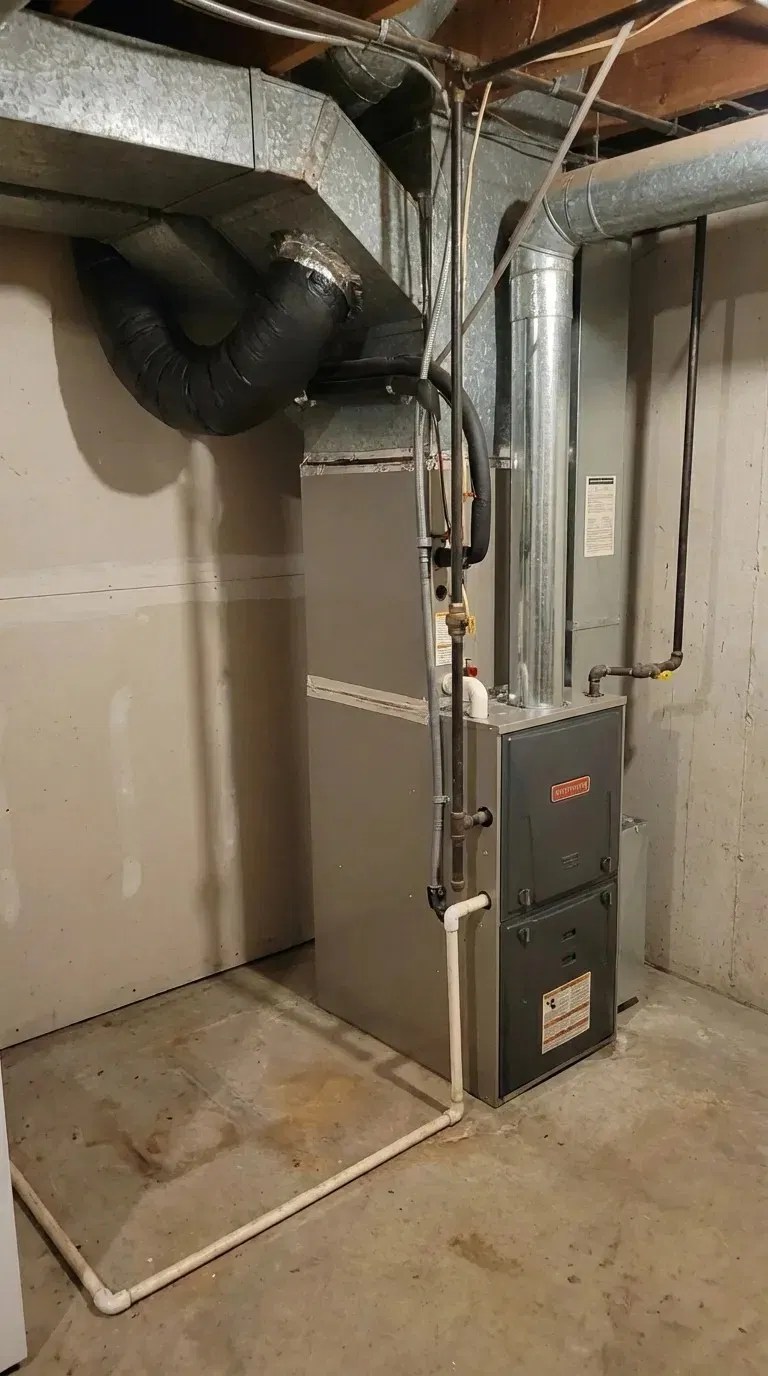
Comfort differences in a Sacramento home
The biggest comfort difference is how the heat feels.
A furnace produces hotter air for shorter cycles. Some homeowners prefer that quick, strong burst of heat, especially on a cold morning. A heat pump usually delivers gentler, steadier heat. The air from the vents may feel warm rather than hot, but the system can run longer and maintain the thermostat setting more consistently.
A properly sized heat pump should be able to handle normal Sacramento winter conditions. The quality of the design matters, though. Oversizing or undersizing the equipment, using restrictive ductwork or skipping airflow testing can affect comfort with either type of system.
The system should be selected using a load calculation, not simply by matching the size of your old equipment.
Operating costs and the 2026 SMUD heat pump rebate
Operating cost depends on your home, equipment, thermostat settings, utility rates and whether your existing system is gas or electric. SMUD states that switching from gas heating to a heat pump saves about $500 per year on average, but actual savings vary by home and usage.
SMUD also reports that more than 23,000 gas-fired space and water heating systems have been replaced through its Advanced Home Solutions program. Those figures provide useful context, but they are not a promise of savings for an individual property.
For qualifying 2026 projects, SMUD lists these HVAC rebate levels:
- Up to $3,000 for a variable-stage heat pump gas-to-electric conversion.
- $2,000 for a qualifying two-stage heat pump gas-to-electric conversion with a 15.2 SEER2 minimum.
- $1,000 for a qualifying multi-stage heat pump electric-to-electric upgrade.
For a full breakdown of eligibility and current incentive amounts, see our SMUD Heat Pump Rebates 2026 guide.
SMUD’s Go Electric bonus rebates can add up to $2,000 toward an electrical panel replacement (200 amps or less), a subpanel or eligible appliance circuits. SMUD pays up to $500 per eligible circuit — an EV charger, range or cooktop, or clothes dryer — and up to $500 for a subpanel, with a $2,000 total rebate if a panel upgrade is included with future appliance circuits. The home must be all-electric ready, meaning the panel plus all eligible circuits, and replacing an existing gas furnace or gas water heater with a qualifying heat pump is required to participate.
The program has important conditions. The home must have an active SMUD account and be individually metered. The installation must be completed by a participating contractor in the SMUD Contractor Network. The system must be two-stage or variable-stage, meet the required efficiency level and include a Wi-Fi-enabled, seven-day programmable connected thermostat.
The installation must also comply with Title 24 through HERS CF3R documentation. Any new ductwork must be insulated to at least R-8. Single-stage systems are not eligible. Rebates are subject to funding availability, and the contractor submits the rebate application.
Before assuming the rebate applies, check your actual electric bill. Utility service areas do not follow city boundaries. Some homes in the Sacramento region are served by SMUD, while others are served by Roseville Electric or PG&E. Rebate amounts and program rules differ by utility.
What does a heat pump installation cost?
When comparing a heat pump vs. furnace in Sacramento, cost is another important factor—especially when electrical upgrades or ductwork are involved.
SMUD’s published installation cost data comes from actual residential customer projects completed during the previous 12 months. These are SMUD-reported figures, not California Renewable Energy (CARE) prices.
- Gas-to-electric heat pump HVAC installation: median cost of about $18,804, with reported costs ranging roughly from $3,500 to $65,620.
- Electric-to-electric heat pump upgrade: median cost of about $17,336, with reported costs ranging roughly from $7,250 to $44,763.
Those wide ranges show why a general online price is not enough to plan a project. The cost of either a heat pump or a furnace-and-AC replacement can be affected by:
- System size and the load calculation.
- The condition, size and layout of existing ductwork.
- Whether the ducts can be reused, sealed or modified.
- Electrical panel capacity and any panel or circuit work.
- Gas-to-electric conversion work.
- Equipment location in an attic, garage, crawlspace or side yard.
- Line-set and condensate drain routing.
- Zoning and filtration requirements.
- Permits, HERS testing and Title 24 documentation.
- Equipment tier, brand and efficiency rating.
- Whether insulation or air sealing should be completed first.
A heat pump conversion can require more electrical and installation work than replacing a gas furnace in the same location. However, if both your old furnace and AC are near the end of their service lives, one heat pump system may replace both pieces of equipment.

When a furnace and AC replacement may still make sense
A heat pump is not automatically the right choice for every Sacramento homeowner.
A furnace, or a furnace-and-AC replacement, may be reasonable when:
- Your home has very limited electrical capacity.
- The cost of panel, circuit or ductwork upgrades would push the project beyond your budget.
- Your existing AC is still relatively new and only the furnace needs replacement.
- You are managing a rental property or expect to move in the short term.
- You strongly prefer the hotter air produced by a gas furnace.
- A straightforward replacement can restore reliable comfort with less disruption.
The important point is to compare complete systems rather than comparing only the outdoor equipment. A lower equipment price may not remain lower after electrical work, duct modifications, permits and testing are included.
The best choice between a heat pump vs. furnace in Sacramento ultimately depends on your home, utility, existing equipment and installation requirements.
Federal and state incentive updates for 2026
The federal 25C tax credit that applied to qualifying heat pump HVAC systems installed between January 1, 2023, and December 31, 2025, is no longer available for systems placed in service in 2026. Equipment placed in service after December 31, 2025, no longer qualifies for that credit.
Projects placed in service by December 31, 2025, may still be claimed on a 2025 federal tax return. Confirm your own situation with a qualified tax professional.
Several California heat pump incentive budgets are exhausted or waitlisted. As of September 2026, TECH Clean CA single-family heat pump water heater incentives are fully reserved and closed to new applications. Before including a state incentive in your project budget, check the current status through the Switch Is On incentive lookup. A utility rebate, such as SMUD’s, has separate rules and funding.
What to ask before you decide
The most useful conversation is with a contractor who can explain how the proposed system fits your home. Ask:
- What does the load calculation show, and what equipment size does it support?
- Is the proposed heat pump single-stage, two-stage or variable-stage?
- Which SMUD rebate category applies, if any?
- What is included for duct repairs, sealing, replacement or new R-8 insulation?
- Is panel, subpanel or circuit work needed?
- Are permits and HERS CF3R testing included?
- What are the exact equipment model numbers and efficiency ratings?
- How will the rebate be handled, and what happens if funding is unavailable?
- What are the equipment, labor and workmanship warranty terms?
- Will insulation or air sealing improve the result before the HVAC work begins?
A clear proposal should explain the system and the process, not just list a total price.
FAQ
Is a heat pump worth it in Sacramento’s climate?
It can be a strong option because Sacramento has relatively moderate winters and long cooling seasons. A heat pump provides both heating and cooling, and modern two-stage and variable-stage equipment is designed for this type of climate. Whether it is the best financial choice depends on your utility, home condition, existing equipment and installation scope.
Can a heat pump work with existing ducts?
Often, yes. Existing ducts may be reusable if they are properly sized, accessible and in good condition. The contractor should inspect duct leakage, airflow, insulation and return-air capacity. New or replaced ductwork must meet applicable Title 24 requirements, including at least R-8 insulation where required by the SMUD program.
How long does a heat pump last?
There is no fixed service life. Many residential air-source heat pumps provide around 10 to 15 years or longer when properly installed and maintained, but usage, equipment quality, coastal or inland conditions, airflow and repairs all matter. Because a heat pump cools and heats, it may operate more often throughout the year than a furnace.
What happens if SMUD rebate funding runs out?
SMUD rebates are subject to funding availability. If funding is unavailable, you should not assume the rebate will reduce your project cost. Ask the participating contractor to verify the current program status, explain when the application is submitted and show how the proposal changes if the rebate cannot be received.
Making the decision before winter
For Sacramento County homeowners deciding between a heat pump and a furnace, the best answer depends on the whole project. A heat pump may offer efficient heating and cooling in one system, along with access to current SMUD incentives for eligible customers. A furnace-and-AC system may be the more practical choice when electrical work, budget or existing equipment condition points in that direction.
Start by checking your latest electric bill, confirming your utility, reviewing the condition of your current system and asking a qualified contractor to explain both the design and installation process. California Renewable Energy (CARE) can help you compare HVAC replacement options, understand the project scope, financing and available utility-program requirements without treating one option as right for every home.
Incentive amounts, program rules, and tax treatment can change. This article is general information, not tax or financial advice. Confirm current SMUD terms and your own tax situation with SMUD and a qualified tax professional.