

The SMUD heat pump rebate can provide up to $3,000 toward a qualifying high-efficiency HVAC system in 2026. If your air conditioner struggled through another Sacramento summer—or your HVAC system is getting close to replacement—this may be a good time to consider upgrading.
A heat pump is an all-electric system that both cools and heats your home. In summer, it works like an air conditioner by moving heat out of the house. In winter, it pulls heat from the outdoor air and moves it indoors. That means one efficient system can replace separate heating and cooling equipment in many homes.
The key is choosing the right equipment, confirming your home’s eligibility and working with a contractor who participates in the SMUD Contractor Network.
What is a heat pump HVAC system?
A heat pump is essentially an air conditioner that can run in reverse.
During summer, it removes heat from your home and releases it outdoors. During winter, it pulls available heat from the outdoor air and moves it inside. One system provides both heating and cooling, so you do not need separate equipment for a gas furnace and electric air conditioner.
Sacramento’s climate is well suited to modern heat pumps. Newer two-stage and variable-stage systems are designed to operate efficiently during both hot summers and cooler winter weather.
They can also improve comfort by:
- Running at lower speeds for longer periods
- Reducing temperature swings and hot or cold spots
- Operating more quietly
- Supporting better humidity control
- Filtering more air because the blower runs more consistently
Not every heat pump qualifies for SMUD’s HVAC rebate. Single-stage systems, for example, are not eligible under the requirements listed on SMUD’s Heating and Cooling Rebates page.
Why inverter heat pumps work well in Sacramento
Many of the most efficient heat pumps today use inverter technology. Instead of only turning fully on or fully off, an inverter heat pump can speed up or slow down to match your home’s actual heating or cooling needs.
That variable-capacity operation works especially well in Sacramento because our weather can swing from very hot summer afternoons to cooler mornings and winter nights. Rather than constantly cycling at one fixed output, an inverter system can run more steadily, which may help with:
- More even indoor temperatures
- Better efficiency during part-load conditions
- Quieter operation
- Improved comfort during long cooling seasons
In general, inverter-driven systems are often the same types of variable-stage systems that qualify for the higher SMUD rebate tiers.
SMUD heat pump rebates available in 2026
Your rebate depends on what system you have now and which heat pump you install.
| Project type | SMUD rebate |
|---|---|
| Variable-stage heat pump, gas-to-electric conversion | $3,000 |
| Two-stage heat pump, gas-to-electric conversion, 15.2 SEER2 minimum | $2,000 |
| Go Electric bonus or panel upgrade for qualifying gas-to-electric conversion | $2,000 |
| Multi-stage heat pump upgrade, electric-to-electric | $1,000 |
1. Variable-stage gas-to-electric conversion: up to $3,000
This is the highest standard SMUD HVAC rebate. It applies when you replace a gas heating system with a qualifying variable-stage heat pump system.
A variable-stage compressor can adjust its output across a broad range instead of operating only at full capacity. That allows the system to match the heating or cooling demand more closely, which can improve comfort and reduce wasted energy.
2. Two-stage gas-to-electric conversion: up to $2,000
A qualifying two-stage heat pump that replaces gas heating may receive a $2,000 SMUD rebate.
The system must meet a minimum efficiency rating of 15.2 SEER2. SEER2 is a standard measure of cooling efficiency. In simple terms, a higher rating generally means the system uses less electricity to provide the same amount of cooling, although actual operating costs also depend on system sizing, ductwork, thermostat settings and your home’s insulation.
3. Go Electric bonus or panel upgrade: up to $2,000
Some gas-to-electric conversions require an electrical panel upgrade to support the new equipment. SMUD offers a potential $2,000 Go Electric bonus or panel-upgrade rebate for qualifying projects.
The gas-to-electric conversion requirement is important. An electric-to-electric HVAC replacement does not qualify for this gas-conversion panel incentive.
Ask your contractor to evaluate your existing panel before finalizing the project. The upgrade may depend on your panel’s age, available amperage, current electrical loads and the requirements of the proposed heat pump.
4. Electric-to-electric heat pump upgrade: $1,000
If your home already uses electric heating and cooling, you may qualify for a $1,000 rebate when upgrading to a qualifying multi-stage heat pump.
This can apply to homeowners replacing an older electric heat pump or another qualifying electric HVAC setup with a new two-stage or variable-stage system.
Why SMUD increased heat pump rebates in 2026
In February 2026, SMUD increased its heat pump rebates after certain federal tax credits and state incentives expired or changed. The goal was to help keep high-efficiency electric HVAC upgrades more affordable for local homeowners.
SMUD has also pointed to broader long-term savings and adoption data behind this push. According to SMUD, switching from gas heating to a heat pump saves about $500 per year on average, and more than 20,000 gas systems have already been replaced through its Advanced Home Solutions program.
That does not mean every household will save the same amount. Actual savings depend on your current equipment, energy use, home efficiency and utility rates. But it helps explain why SMUD is continuing to put meaningful rebate dollars behind heat pump conversions.
What does heat pump HVAC replacement cost in Sacramento?
SMUD publishes installation-cost data from actual residential customer projects in its Advanced Home Solutions Rebates program. These are SMUD median costs from actual customer projects completed over the previous 12 months, not California Renewable Energy (CARE) prices. The figures are useful for planning, but they are not fixed-price estimates.
Before rebates, the median installation costs are approximately:
- Gas-to-electric heat pump HVAC: $18,804
- Electric-to-electric heat pump upgrade: $17,336
These figures can vary significantly. SMUD reports project ranges from approximately $3,500 to $65,620 for gas-to-electric installations and $7,250 to $44,763 for electric-to-electric upgrades.
The final price may be affected by:
- System size and efficiency rating
- Duct repairs or replacement
- Installation location, such as an attic, garage or crawlspace
- Electrical work or a panel upgrade
- Changes to the outdoor equipment location
- Zoning or indoor air-quality equipment
- New ductwork and insulation
- Permits, code requirements and inspections
- Equipment brand and system type
For example, a gas-to-electric project with a median cost of $18,804 could have an estimated cost of $15,804 after a $3,000 HVAC rebate, before considering any other incentive or project adjustment. If the project also qualifies for the $2,000 panel-upgrade rebate, the combined incentive could reduce that example by up to $5,000.
That is only an illustration: not a quote or guaranteed savings. Your project may cost more or less, and rebates are subject to program rules and funding availability.
Can SMUD rebates be combined with other incentives?
Yes. SMUD states that its heat pump HVAC rebates can be stacked with qualifying statewide and federal incentive programs when those programs are available.
However, incentive programs change frequently. For a system installed in 2026, do not automatically assume that an older federal tax-credit article still applies. SMUD’s current page notes that the federal tax credit described there applies to qualifying systems installed between January 1, 2023, and December 31, 2025.
You can review current incentive possibilities through SMUD’s external incentive lookup. Your contractor should also confirm:
- Whether funding remains available
- Whether your household or property meets eligibility requirements
- Whether incentives apply to your specific equipment
- Whether the incentive is paid to you or the contractor
- Whether applications must be submitted before installation
If you live in Roseville, Rocklin, Loomis or Auburn, check your electric utility before relying on SMUD figures. Utility service areas do not always match city boundaries, and rebate amounts can differ.
How to qualify and apply for the rebate
SMUD requires qualifying heat pump HVAC projects to be installed by a participating contractor in the SMUD Contractor Network.
The basic process is:
- Confirm your electric utility and SMUD account.
The home generally needs an active SMUD account and qualifying electric service. - Choose a participating contractor.
Use the SMUD Contractor Network to confirm participation. - Review the equipment proposal.
Verify that the proposed system is two-stage or variable-stage and meets the applicable efficiency requirements, including the 15.2 SEER2 minimum where required. - Check the home’s electrical and ductwork needs.
Your contractor should identify panel work, duct repairs, Title 24 requirements and other code-related items before installation. - Sign the rebate application.
Your contractor provides the application for your signature and submits it to SMUD. - Complete inspections and receive the rebate.
Rebates are subject to funding and program approval. Some contractors may offer the rebate amount upfront and collect it from SMUD after the project is completed.
SMUD also lists requirements involving a connected Wi-Fi-enabled programmable thermostat, Title 24 compliance and HERS CF3R testing. Your contractor is responsible for confirming the complete technical requirements for your home and equipment.

How California Renewable Energy (CARE) can help
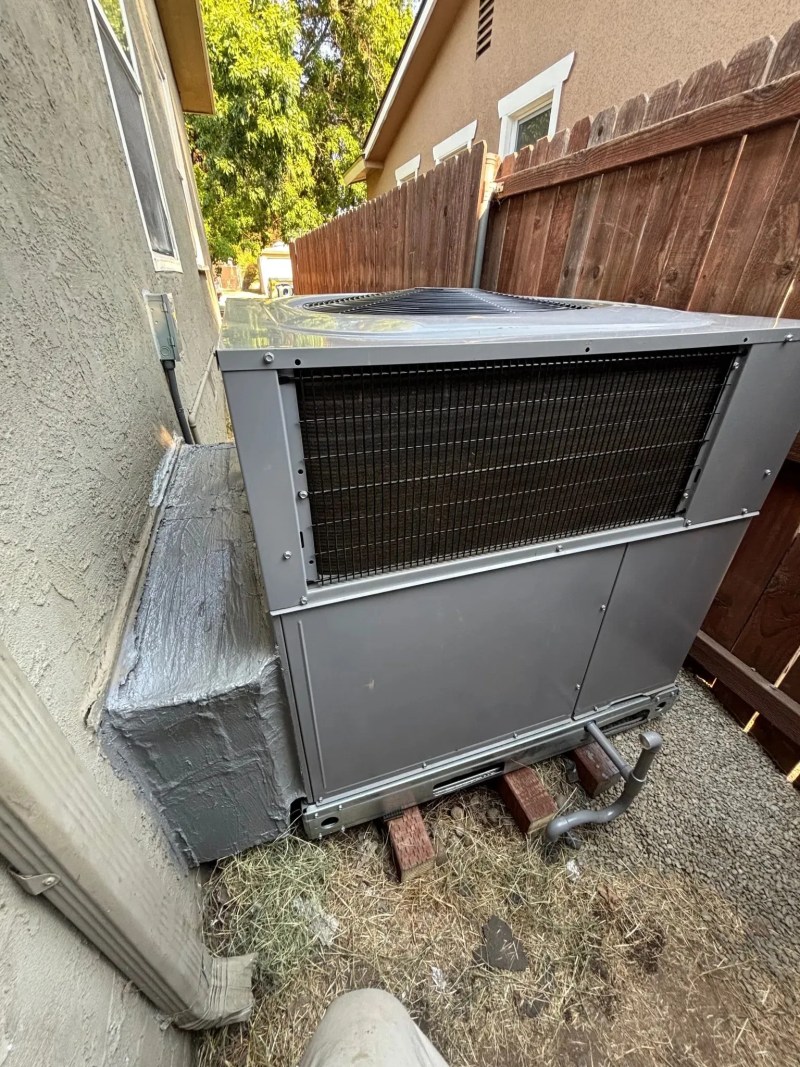
Heat pump replacement involves more than setting a condenser in the side yard. The project may include equipment selection, load calculations, electrical coordination, permits, inspections and rebate paperwork.
California Renewable Energy (CARE) helps Sacramento-area homeowners evaluate high-efficiency HVAC upgrades and understand the steps involved. We provide transparent, fixed-price proposals and support the project lifecycle from design through permitting and final inspection.
If you are thinking about replacing your HVAC system, you can request a free HVAC estimate from California Renewable Energy (CARE). We can help you understand your options, review rebate eligibility and put together a clear scope of work for your home.
Before choosing a system, make sure your contractor clearly explains:
- The exact heat pump model and efficiency rating
- Whether the system is two-stage or variable-stage
- Which SMUD rebate category applies
- Whether a panel upgrade is necessary
- What is included for ducts, permits and inspections
- How the rebate will be handled
- Which incentives are confirmed versus only potential
A heat pump can be a major home investment. Understanding the rebate category and total project scope helps you compare proposals based on the real cost: not just the equipment price.
The bottom line for Sacramento homeowners
In 2026, SMUD customers may qualify for:
- Up to $3,000 for a variable-stage gas-to-electric heat pump
- Up to $2,000 for a qualifying two-stage gas-to-electric heat pump
- Up to $2,000 for a qualifying Go Electric panel upgrade
- $1,000 for a multi-stage electric-to-electric upgrade
With SMUD-reported median installation costs of approximately $18,804 for gas-to-electric projects and $17,336 for electric upgrades based on actual customer projects from the previous 12 months, the rebate can make a meaningful difference: but the right system and proper installation matter just as much.
For current requirements, funding status and eligibility, review SMUD’s official heating and cooling rebate information, then speak with a participating contractor before making a decision.