

Real CARE installation: all-black solar array on a grey concrete tile roof.
Electric bill still high with solar? It’s frustrating to invest in a solar system and still open a utility bill that feels too high. Solar can reduce the electricity you buy from your utility, but it does not automatically mean a tiny or zero bill. You may still pay for power drawn from the grid, along with other charges on your utility bill. A solar loan, lease, or power purchase agreement may also have a separate payment.
If your electric bill is still high with solar, the cause is usually one of four things: a production problem, a system sized for lower usage, a change in your household’s electricity needs, or how your rate plan values electricity at different times. Start by checking how much your system produces and how much your home uses. The answer is not always to add more panels.
Is your solar system producing what it should?
Solar panels can remain visible on the roof even when a system is producing less than expected. Possible causes include inverter problems, failed equipment, monitoring or communication issues, new shading, dirty or damaged panels, normal equipment degradation, or an installation or design issue.
Check your monitoring app or inverter display, if available, and compare current production with the system’s expected production. Look at similar periods, since production changes with season, weather, and daylight hours. If monitoring has stopped reporting, that does not necessarily mean the system has stopped working, but it does mean you may need another way to confirm its performance.
A contractor can review production data and system details to help identify whether the panels, inverter, wiring, or another component needs attention. Learn more about CARE solar services.

Real CARE installation: SolarEdge HD-Wave inverter and wall-mounted home battery on an exterior stucco wall.
Was the solar system undersized from the beginning?
Some solar systems were designed to offset only part of a home’s electricity use. The original design may have been based on older utility bills, so it might not match what your household needs today.
There are several reasons a system may have been sized below the home’s total annual use. Roof space may have been limited, the homeowner may have had a budget in mind, utility rules may have shaped the design, or the original installer may have recommended a smaller system.
Check your original proposal, utility bills, and solar production records to understand what the system was expected to cover. The CPUC’s California Solar Consumer Protection Guide explains what a solar contract and proposal should include. If the proposal estimated a partial offset, a remaining utility bill may be consistent with that design. If you are unsure, a contractor can review the documents and explain how the system was sized.
Has your household started using more electricity?
Your solar production might be similar to what it was when the system was installed, while your electricity use has increased. Common reasons include:
- More people living in the home or working from home
- New HVAC equipment or heavier air-conditioning use
- An electric vehicle, pool, or spa
- New electric appliances or a heat pump
- A home addition, or changes in lifestyle and occupancy
A new heat pump or EV can make a home more comfortable or convenient, but it can also add significant electricity use. Compare your current bills with the period before those changes, and check whether the solar system’s production changed at the same time. If usage rose while production stayed about the same, the gap may be due to new demand rather than a system fault.
Are you using electricity when your solar is not producing?
Solar panels usually produce most of their electricity during daylight hours. Your home may use more power in the evening and overnight, when the panels are producing little or none. That means you can export excess solar energy during the day and still buy electricity from the grid later.
The value of that exported energy and the price you pay for grid electricity depend on your utility, rate plan, and solar billing arrangement. Time-of-use plans charge different prices at different times. PG&E’s time-of-use rate plan information explains how its plans vary, but other providers have their own rate structures. Peak periods and billing rules can differ for PG&E, SMUD, Roseville Electric, and community choice aggregators such as Pioneer.
Check your current rate plan and bill to see when you are importing power, exporting power, and being charged. The CPUC’s information about net energy metering and net billing outlines how billing arrangements differ for customers served by California’s investor-owned utilities. Your utility or electricity provider can explain the rules that apply to your account.
Could battery storage help?
A battery can store some of your daytime solar production so you can use it later. Depending on your setup and rate plan, it may help you use more of your own solar energy, reduce grid use during more expensive periods, and provide backup power during an outage when properly configured.
A battery does not automatically eliminate an electric bill. Whether it makes financial or practical sense depends on your usage pattern, utility, rate plan, existing solar equipment, and battery size. For a starting point, explore CARE’s guides to solar battery storage and home battery sizing.
Would adding more solar panels help?
Expanding your solar array may make sense if your home uses more electricity than the existing system can produce. Before considering an expansion, determine how much electricity your home uses, how much the existing system produces, when you use electricity, and whether the current system is working properly.
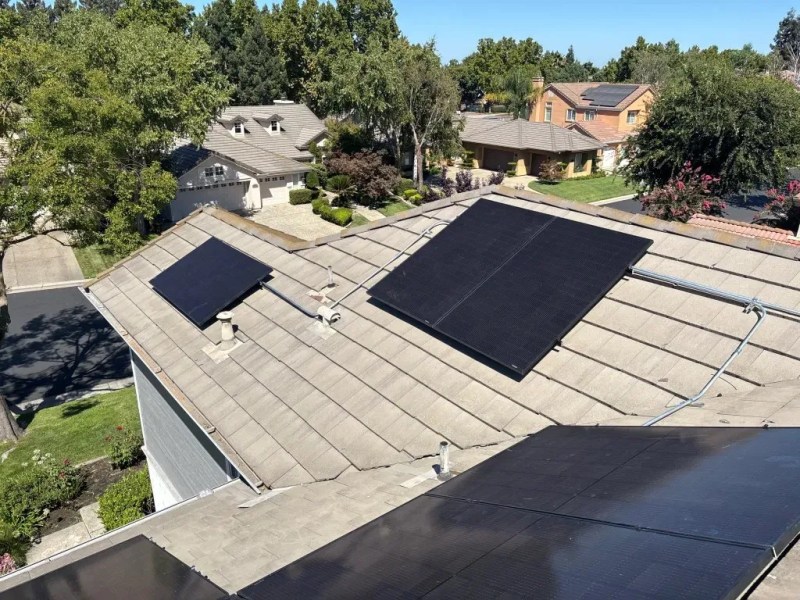
Real CARE installation: a completed residential array on a tile roof, with conduit routing along the roof surface.
An expansion may require a new design, permits, compatible equipment, and utility review. If you are on a legacy net metering tariff, understand how a proposed change could affect your existing arrangement before authorizing work. The effect depends on the utility and the specific change. Adding panels does not automatically remove every homeowner from an older arrangement. A battery-only addition does not itself add solar generation capacity, though the applicable utility’s rules should still be checked before making changes.
The CPUC’s net energy metering and net billing information applies to certain investor-owned utility territories. SMUD has separate rules and explains its Solar and Storage Rate for its customers. Confirm the relevant requirements with your own utility before modifying the system.
What if the original solar installer is no longer in business?
If your original installer has closed, you may still be able to have another licensed contractor evaluate your system. Depending on the equipment and situation, a contractor may help with diagnostics, monitoring problems, inverter or equipment issues, repairs, system expansion, battery storage, or coordinating with a manufacturer about warranty coverage where applicable.
For more on what to expect, read What Happens If Your Solar Company Goes Out of Business in California?.
Electric bill still high with solar: what to check before buying more equipment
Before recommending more panels or a battery, a contractor should look at the whole picture. Helpful information includes:
- Twelve months of electricity use and interval data, if available
- Existing solar production and system size
- Inverter and other equipment details
- Your utility and current rate plan
- When your household uses electricity
- Roof space and roof condition
- Any planned changes, such as an EV, heat pump, or home addition
Interval data is especially useful because it shows when electricity is used, not just the monthly total. It can help explain whether your home draws the most power during sunny hours or later in the evening, and whether your rate plan makes that timing important.
Gather your recent utility bills, solar monitoring records, and original system documents if you have them. Also confirm whether you are looking at a utility electricity bill, a solar financing payment, or both. They are separate costs and need to be understood separately.
How CARE evaluates an existing solar system
California Renewable Energy (CARE) works with homeowners in Northern California who already have solar but are still facing higher-than-expected bills. We can review your electricity use, solar production, system size and equipment, performance concerns, battery options, and potential expansion where appropriate. If service or troubleshooting is needed, or roofing work may affect the system, we can consider those factors too.
Our goal is to understand why your home is still buying electricity before recommending a solution. Sometimes the issue is production, sometimes it is increased use or the rate plan, and sometimes the system simply needs a closer review. New equipment is not automatically the answer.
If you already have solar but your electric bill still feels too high, the first step isn’t necessarily buying more equipment. California Renewable Energy (CARE) can review your electricity usage, solar production, existing equipment, and current rate situation to help determine where the gap is and what options may make sense for your home.
Whether the answer is service or troubleshooting, battery storage, additional solar, or simply a better understanding of how your existing system is performing, the goal is to identify the problem before recommending a solution.
California Renewable Energy (CARE) serves homeowners throughout Northern California and holds CSLB license #1068801 with an A+ BBB rating.