

Real CARE installation: CARE service truck at a residential solar project site.
When a solar company goes out of business, homeowners are often left wondering what happens next. The good news is that your panels usually don’t stop working just because the installer is gone. You may, however, lose an easy way to get service, access monitoring, or ask questions about warranties and repairs.
The solar industry sometimes refers to this as an orphaned solar system. You still have solar equipment on your home, but the original installer is no longer available to help with service, warranty support, monitoring, repairs, or upgrades. As solar installers have closed or stopped servicing older customers, this situation has become more familiar to homeowners across Northern California. It doesn’t mean every solar system is in trouble, and there are practical steps you can take.
When a Solar Company Goes Out of Business: What Happens Next?
It depends on what you need from the company. If your system is working normally, you may not need immediate service. If something fails, the original installer may no longer be available to diagnose it, coordinate a manufacturer claim, or perform repairs.
Start by identifying whether you own the equipment or are making payments under a lease or power purchase agreement. Then gather the system records you have and check the status of each piece of equipment. Knowing the panel, inverter, and battery brands and model numbers can make it easier to contact manufacturers or speak with another contractor.
Does the system stop working when the installer is gone?
Usually, no. A properly operating system can continue producing electricity without the original installer. The installer’s closure does not itself switch off your panels.
A system may need attention if an inverter or other component fails, a safety issue arises, or the equipment stops communicating with its monitoring app. If the system appears to have stopped producing, check the inverter display or the manufacturer’s app if you can access it. Don’t open electrical equipment or attempt repairs yourself. A licensed contractor can help determine whether the issue is with the equipment, monitoring, or another part of the system.
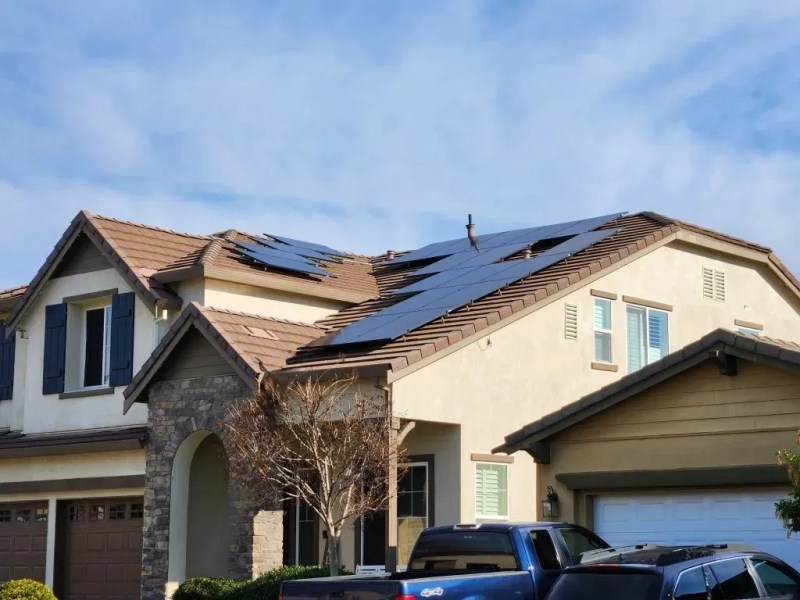
Real CARE installation: residential rooftop solar in Lincoln, California.
What happens to the installer’s workmanship warranty?
A workmanship warranty is generally a promise from the installer about the quality of its installation work. If that company has dissolved, filed bankruptcy, or stopped operating, getting help through that warranty may be difficult or impossible. The exact result depends on the warranty terms and the company’s circumstances.
Another contractor does not automatically take over or honor the original installer’s workmanship warranty. A new contractor may be able to inspect or work on the system, but that is separate from the original company’s promise. Ask for a written description of any inspection, repair, or installation work and what warranty applies to that new work.
Are the panel, inverter, or battery warranties still valid?
Possibly. Manufacturer warranties are separate from an installer’s workmanship warranty, so the installer’s closure does not automatically cancel a manufacturer’s coverage. But a warranty is not automatic coverage for every failure. It depends on the manufacturer, equipment, warranty terms, and whether the specific problem qualifies.
Find the equipment labels and serial numbers, then contact the manufacturer or check its official support site. Ask what documents are needed to open a claim, whether the equipment is registered, and whether the warranty covers labor or only replacement parts. For example, SolarEdge offers a support path for system owners whose installer is no longer in business. Other manufacturers have their own processes.
What if the monitoring app stops working?
A monitoring problem does not necessarily mean the system has stopped producing power. You may have lost your login, the app may have changed, or the system may have lost its internet connection. In other cases, monitoring data can help reveal a system fault.
Try the following steps:
- Check for the original app login, welcome email, or equipment documentation.
- Contact the inverter or monitoring-system manufacturer to ask about account recovery or system access.
- Make a note of any error messages and when the app last showed production.
- Ask a qualified contractor whether the monitoring equipment can be restored or needs service.
Don’t share account passwords publicly. A contractor may need your authorization or help from the manufacturer to access system information.
Can another solar contractor service the system or replace a failed inverter?
Often, yes. California homeowners are not necessarily limited to the original installer for future solar work. The Contractors State License Board (CSLB) authorizes several contractor license classifications to perform solar work, including C-46 Solar and C-10 Electrical contractors. Depending on the scope of the project, other classifications may also be authorized. You can verify a contractor’s license and classification through CSLB before hiring.
A contractor may be able to diagnose a problem or replace a failed inverter, but the right solution depends on the equipment and the condition of the system. A replacement inverter needs to work with the existing panels, wiring, monitoring, and electrical setup. The contractor may also need to confirm whether the replacement requires permits, utility paperwork, or manufacturer involvement.
Before agreeing to the work, the contractor may need to inspect:
- Equipment brands, models, and compatibility
- Electrical components, wiring, and system condition
- Whether the installation meets applicable code requirements
- Roof condition and access to the panels
- Whether monitoring data or manufacturer support is available
A contractor may be unable to repair or modify every system, or may recommend a different approach after an inspection.
Can you add a battery or expand an orphaned solar system?
In many cases, battery storage can be added to an existing solar system, but the design depends on the existing inverter, electrical equipment, battery compatibility, and the backup power you want. A contractor will need to assess the system rather than assume that any battery will work with it. Learn more about solar and battery storage options.
Expanding the solar array or changing equipment can involve additional design, permitting, and utility review. If your system is on a legacy net energy metering tariff, ask how the proposed work could affect your current arrangement before authorizing changes. A battery-only addition does not itself add solar-generation capacity, but an expansion or modification to the generating system may have different tariff or interconnection implications. The CPUC’s net energy metering and net billing information is a useful starting point, and your utility can explain how its rules apply to your specific system.

Real CARE installation: rooftop solar on a residential shingle roof.
What if the roof needs work under the panels?
Roof repairs or replacement may require solar panels to be removed and reinstalled. That work should be planned with both the roofing contractor and a solar contractor, since the panels, mounting equipment, wiring, and roof penetrations all need appropriate handling.
Ask who is responsible for removal, storage, reinstallation, permits, and checking the system after the roof work. If you’re planning a roof project in the Sacramento area, California Renewable Energy (CARE) can help assess whether solar removal and reinstallation related to roofing work may be an option for your home.
What information should you gather before calling a contractor?
You don’t need every document to request an initial evaluation, but whatever you can locate may save time. Look for:
- Original solar contract and invoices
- Panel, inverter, battery, and other equipment model numbers
- Inverter information, including serial number and error messages
- Monitoring app login or account details
- Utility interconnection agreement and Permission to Operate (PTO) documents
- Permit records and final inspection information
- Manufacturer warranty documents
- Financing, lease, or PPA agreement, if applicable
- Records of previous repairs or service calls
If you can’t find the permits or utility paperwork, ask your local building department and utility whether they can help locate project records.
What changes if the system is leased or under a PPA?
With a lease or power purchase agreement (PPA), the equipment may belong to a solar provider rather than you. The provider or another company that services the agreement may have responsibility for monitoring, maintenance, or repairs. Your contract explains what they are responsible for and what you must do.
Before hiring someone to alter leased or PPA equipment, review the agreement and contact the current system owner or service provider. Ask for written approval and instructions. Don’t assume the original installer is also the system owner, and don’t change payment arrangements based only on the installer’s closure. The California Solar Consumer Protection Guide explains the differences between owning a system, leasing, and a PPA.
A clear next step for Northern California homeowners
When a solar company goes out of business, homeowners still have options for service, repairs, monitoring, battery storage, and future system upgrades. If your solar installer went out of business, you don’t necessarily have to figure everything out on your own. California Renewable Energy (CARE) is a Northern California contractor that can evaluate existing solar systems and help you understand what options may be available for troubleshooting, failed equipment replacement, battery storage, upgrades or expansion where appropriate, roofing-related solar work, and possible manufacturer support.
Every system is different, so an evaluation is needed to understand what work is feasible and what equipment is compatible. California Renewable Energy (CARE) holds CSLB license #1068801 and has an A+ BBB rating.