

In Sacramento, fall is when many homes shift from cooling season toward heating season. If your HVAC system is older or has struggled to keep your home comfortable, this change in weather often brings up a practical question: when to replace HVAC in Sacramento, and when does it make more sense to keep the system you have?
The signs below are general references for Sacramento-area homeowners, not a diagnosis of your specific system.
1. Your system is getting older
Furnaces, heat pumps, and air conditioners are designed for a service life that depends on installation quality, maintenance history, local climate, and how often the equipment runs. There is no single age at which every system should be replaced.
Age is a reason to take a closer look, though, not just a number to ignore. Consider the system’s overall performance, repair history, comfort, and energy use together. If an older unit is also showing several of the signs below, it’s worth understanding your HVAC replacement options before putting more money into it.
2. Your utility bills are rising
If your energy use or utility bills have increased, an aging HVAC system can be one factor. Equipment loses efficiency over time, though bills can also change because of weather, utility rates, thermostat settings, or other changes in the home.
Look at your bills alongside your system’s recent performance. A higher bill by itself doesn’t prove that replacement is the answer, but when it comes with worsening comfort or a system that runs for long periods, efficiency and replacement options belong in the conversation.
3. Some rooms are comfortable and others are not
A bedroom that stays chilly while the living room feels warm usually comes down to one of a few causes: the equipment isn’t performing as intended, or ductwork, insulation, airflow, or system sizing is working against it.
That’s why a replacement decision should consider more than the equipment label. A replacement evaluation should consider what’s contributing to the uneven temperatures and whether a new system alone will fix them.
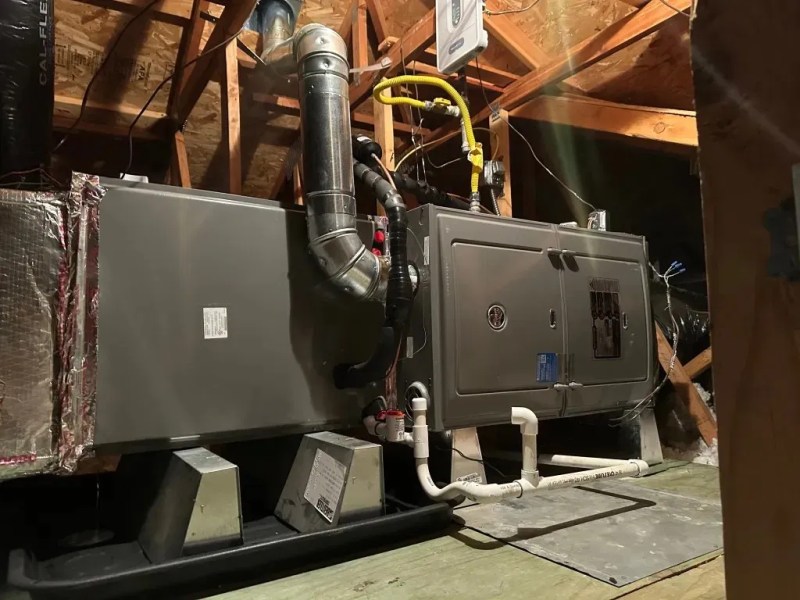
Real CARE installation: gas furnace, air handler, and connected ductwork in an attic.
4. You’ve needed repeated repairs
A single repair doesn’t mean you need a new system. The pattern matters more. When problems keep returning, or different components have needed attention over time, the cost and uncertainty of continued repairs deserve to be weighed against the cost of replacing the system.
When repair costs start stacking up on an older system, it can make more financial sense to put that money toward new equipment rather than continue investing in a system nearing the end of its useful life. A contractor can explain the condition of the existing equipment and what HVAC replacement would involve, so you can make an informed decision with the full picture in front of you.
5. The system turns on and off repeatedly
Short cycling is when an HVAC system starts, runs briefly, shuts off, and then starts again soon afterward. It affects comfort and is a sign the system isn’t operating as it should.
The cause isn’t always the equipment itself: system sizing, airflow, thermostat placement, and other issues play a role. If short cycling is one of several ongoing concerns, it strengthens the case for a full evaluation of the system and home before deciding whether replacement is the best next step.
6. You hear new or unusual noises
Grinding, rattling, or loud humming that wasn’t typical for your system points to a worn or loose component. A sound alone won’t tell you whether replacement is needed, but new or persistent noises are important information to share when the system is evaluated.
If you’re already weighing replacement because of the system’s age, repair history, or inconsistent comfort, unusual noises add weight to that side of the decision. Don’t assume a particular sound means a specific part has failed, but don’t ignore it either.
7. Your home is still uncomfortable while the system runs
If the HVAC system runs for long periods but your home still feels too warm, too cool, or uneven, the system isn’t meeting the home’s needs. Equipment capacity is part of the picture, and ducts, insulation, and the home’s layout matter too.
A replacement system should be selected with the home in mind. Before choosing equipment, ask how the contractor will assess the home and account for the factors that affect comfort, not just the size or model of the old unit.
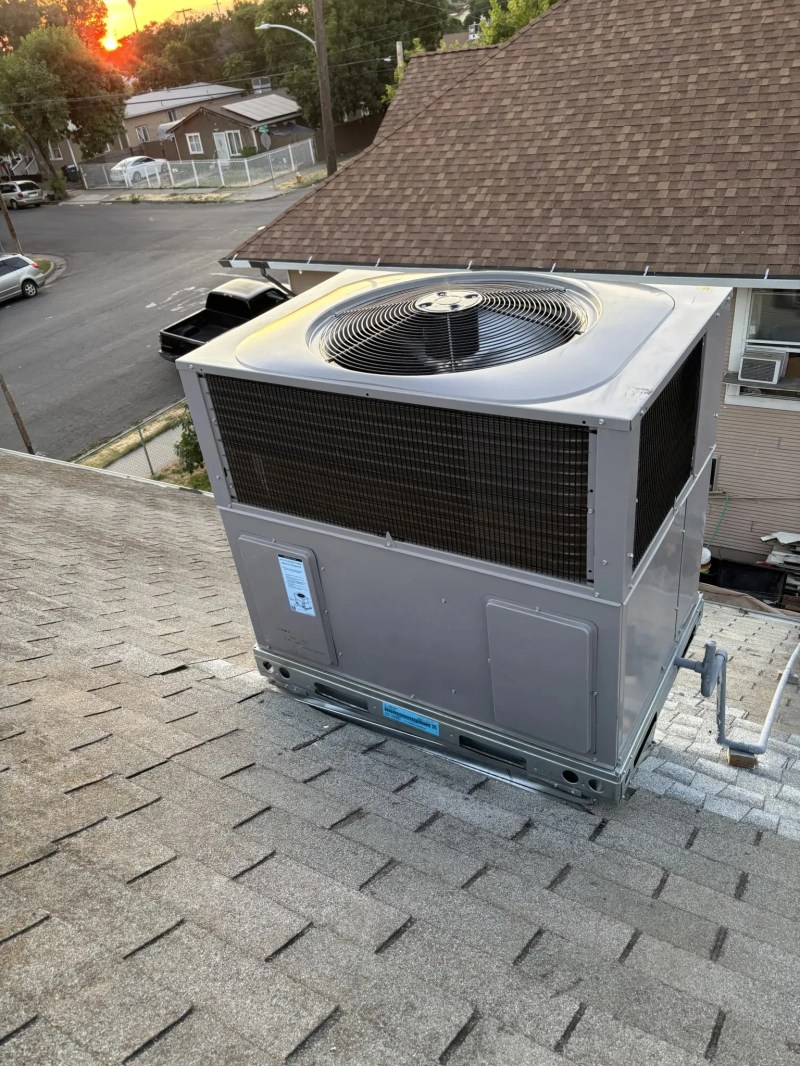
Real CARE installation: central air conditioning unit on a residential rooftop.
SMUD heat pump rebate and replacement options
A modern heat pump is one option to consider when replacing a furnace and air conditioner. It moves heat rather than creating it by burning fuel, and one system can provide both heating and cooling. Sacramento’s climate is well suited to heat pumps, including modern two-stage and variable-stage systems designed to handle hot summers and cooler winter nights.
For eligible SMUD customers, current heat-pump rebates depend on the type of replacement and system. The listed amounts include up to $3,000 for a qualifying variable-stage gas-to-electric conversion, $2,000 for a qualifying two-stage gas-to-electric system with a minimum 15.2 SEER2 rating, and $1,000 for a qualifying multi-stage electric-to-electric upgrade. A qualifying gas-to-electric conversion may also be eligible for a Go Electric bonus of up to $2,000 for qualifying electrical upgrades.
Rebates are not automatic, and program funding and requirements can change. In general, eligibility requires an active SMUD account, an individually metered home, and installation by a participating contractor in the SMUD Contractor Network. SMUD’s qualifying systems must be two-stage or variable-stage (single-stage systems are ineligible) and include a Wi-Fi-enabled, 7-day programmable connected thermostat. Projects must meet applicable Title 24 requirements, including HERS CF3R documentation, and any new ductwork must be insulated to at least R-8. The participating contractor submits the rebate application, and funding is subject to availability.
For a Sacramento-focused walkthrough of the program, see our guide to the SMUD heat pump rebate and check the current SMUD heating and cooling rebate requirements before making a decision. Federal Section 25C tax credits no longer apply to systems placed in service in 2026, so don’t include them in a project estimate for a system installed this year.

Real CARE installation: Goodman rooftop packaged HVAC unit.
A clear replacement plan can help you decide
If you’re trying to decide when to replace HVAC in Sacramento, looking at the system’s age, repair history, comfort, and energy use together can give you a much clearer answer.
Our team helps you understand the proposed system and project process, with detailed proposals and support through design, financing, permits, and inspections. Learn more about our HVAC replacement and installation services. CARE is licensed in California under CSLB #1068801.